
How to Pair Wine and Olive Oil: The Complete Guide
Last Updated: November 10, 2026
Quick Summary
To pair wine and olive oil, match the oil's intensity to the wine's body: mild, grassy oils suit crisp whites, while bold, peppery oils stand up to full-bodied reds. Score each oil on fruitiness, bitterness and pungency, then choose a wine that can absorb its strongest trait without clashing.
- Score oils from 1 to 5 on fruitiness, bitterness and pungency to judge intensity.
- Pair mild oils with crisp, high-acid whites and bold oils with full-bodied reds.
- Watch out for a very bitter oil against a very tannic wine, which can taste harsh.
- Judge freshness by the harvest date rather than the best-by date on the bottle.
- Taste oil plain first; if it tastes flat or waxy, the pairing problem is the bottle.
Table of Contents
- How Olive Oil and Wine Complement Each Other
- Matching Olive Oil Intensity to Wine Body
- How to Pair Wine and Olive Oil for Dinner
- How to Pair Wine and Olive Oil for Cooking
- Extra-Virgin Olive Oil and Wine Pairings Matrix
- Olive Oil Tasting Guide: Freshness, Storage, and a Repeatable Method
- Pairing Pitfalls, Budget Options, and Hosting Your Own Tasting
- Frequently Asked Questions
How Olive Oil and Wine Complement Each Other
Learning how to pair wine and olive oil starts with a simple idea: both are fermented or pressed agricultural products whose flavors shift dramatically depending on what sits beside them.
The two share a common vocabulary. Olive oil is judged on fruitiness, bitterness and pungency, the peppery bite that catches the back of the throat. Wine is judged on body, acidity and tannin.
Extra virgin olive oil, or EVOO, is the reference point for most pairings because it carries the most aroma and flavor.
Matching Olive Oil Intensity to Wine Body
Intensity is the most reliable guide, but "intensity" is not a single dial. Olive oil registers on three separate scales, fruitiness, bitterness, and pungency, and wine registers on three of its own, body, acidity, and tannin. A pairing works when the oil's strongest trait meets a wine trait that can absorb it without echoing it into a clash. A useful approach is to score each oil from 1 to 5 on fruitiness, bitterness, and pungency, then choose a wine whose body roughly matches the oil's total score.
The Three Oil Scales, Briefly Defined
Fruitiness is the aroma of fresh fruit, grass, herbs, or green almond; it is the easiest trait to smell and the one that most often decides whether an oil reads as "mild" or "bold." Bitterness is tasted at the back of the tongue and lingers; it is the trait that most often collides with wine tannin. Pungency is the peppery catch at the back of the throat, a physical sensation rather than a taste, and it is the trait that most often overwhelms delicate whites. A mild oil scores low on all three; a robust oil scores high on at least two.
Pairing Mild and Delicate Oils with White Wines
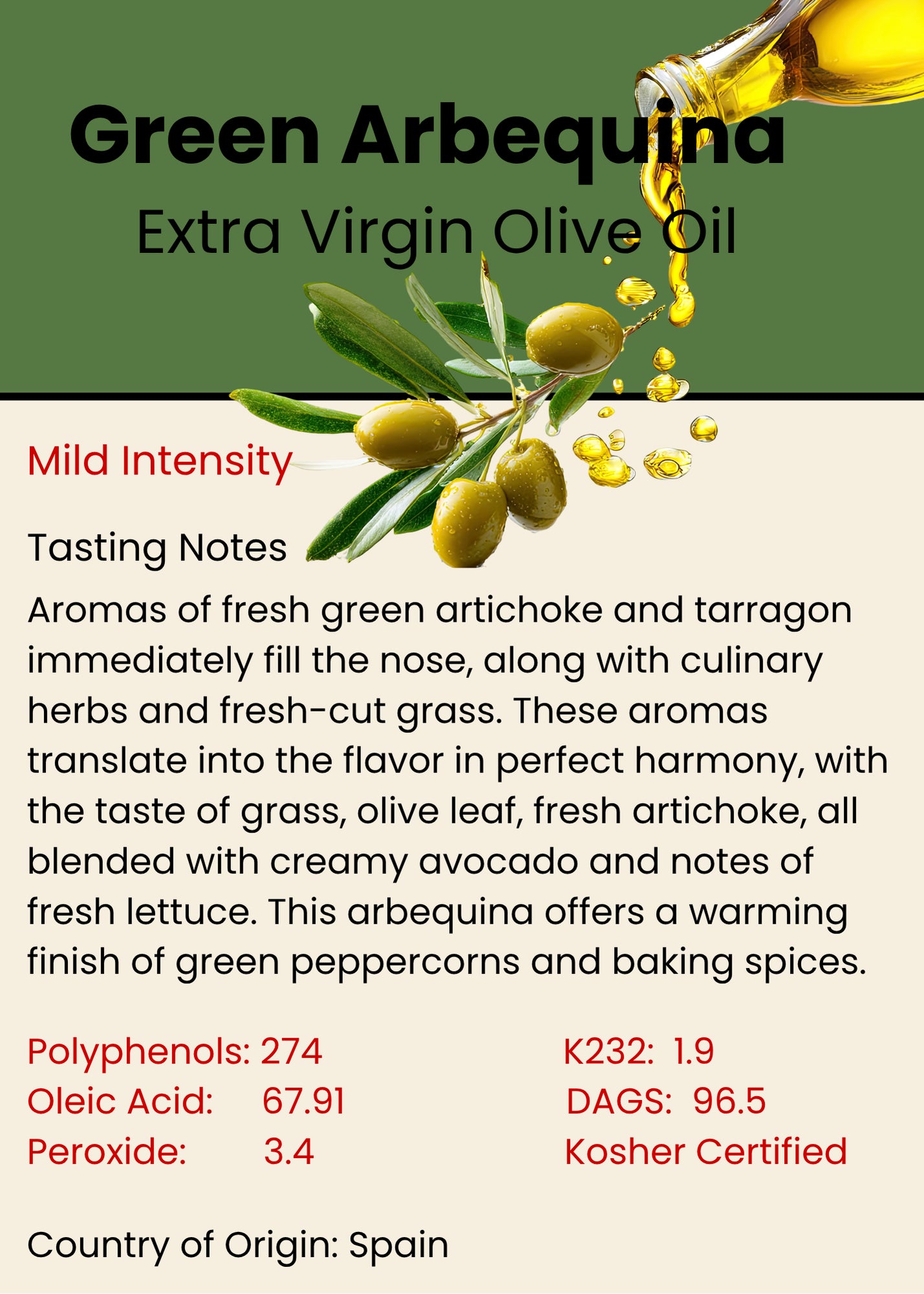
Mild oils, low bitterness, low pungency, grassy or herbaceous fruit, suit light- to medium-bodied whites with bright acidity. Our Green Arbequina Superior Fresh Pressed Olive Oil, at $8.99, opens with aromas of fresh artichoke and tarragon, then finishes with green peppercorns. Drizzled over a crisp Sauvignon Blanc or a Vermentino, it can echo the wine's herbal notes.
Watch out: a high-acid white and a very peppery oil can both feel sharp, so choose one mild component to soften the other, either a lower-acid white or a lower-pungency oil, not both at full strength.
Pairing Strong and Peppery Oils with Red Wines
Bolder oils with pronounced bitterness and pungency stand up to medium- and full-bodied reds, but only if the wine's tannin is matched to the oil's bitterness rather than stacked on top of it. Our Coratina Superior Fresh Pressed Extra Virgin Olive Oil, also $8.99, carries notes of radicchio, green tea and chilli with a lingering warmth that can suit a structured Pinot Noir or a dry red blend. The tannins in the wine and the bitterness in the oil reinforce each other rather than clashing, up to a point.
The Middle Ground Most Guides Skip
Medium-intensity oils, fruity with moderate bitterness and a gentle peppery finish, are the most flexible and the least discussed. They pair with medium-bodied whites (Chardonnay with restrained oak, white Rhône blends), light reds (Beaujolais, Pinot Noir), and dry rosé. If you are unsure where an oil falls, taste a spoonful plain, then taste it on bread, then taste it with a sip of the wine; the oil's dominant trait will tell you which wine scale to match.
A Quick Intensity Ladder
- Delicate oil (low fruit, low bitter, low pungent): crisp white, dry rosé, light red.
- Medium oil (fruity, moderate bitter, gentle pungent): medium white, light-to-medium red.
- Robust oil (high fruit, high bitter, high pungent): full-bodied red, or a rich white with texture.
Use the ladder as a starting point, then adjust for the dish, a salty or acidic dish shifts the balance and is covered in the pitfalls section below.
How to Pair Wine and Olive Oil for Dinner
A full meal gives you more variables, so think in courses. Start light and build toward richer flavors. Pairing wine and olive oil for dinner works best when each dish is matched to one oil and one wine, not a crowd of bottles. As the meal moves from lighter courses to richer ones, a simple bread-and-oil opening can set the pace, with Spirits & Spice offering another way to think about choosing an oil for dipping.
Seafood and Fish
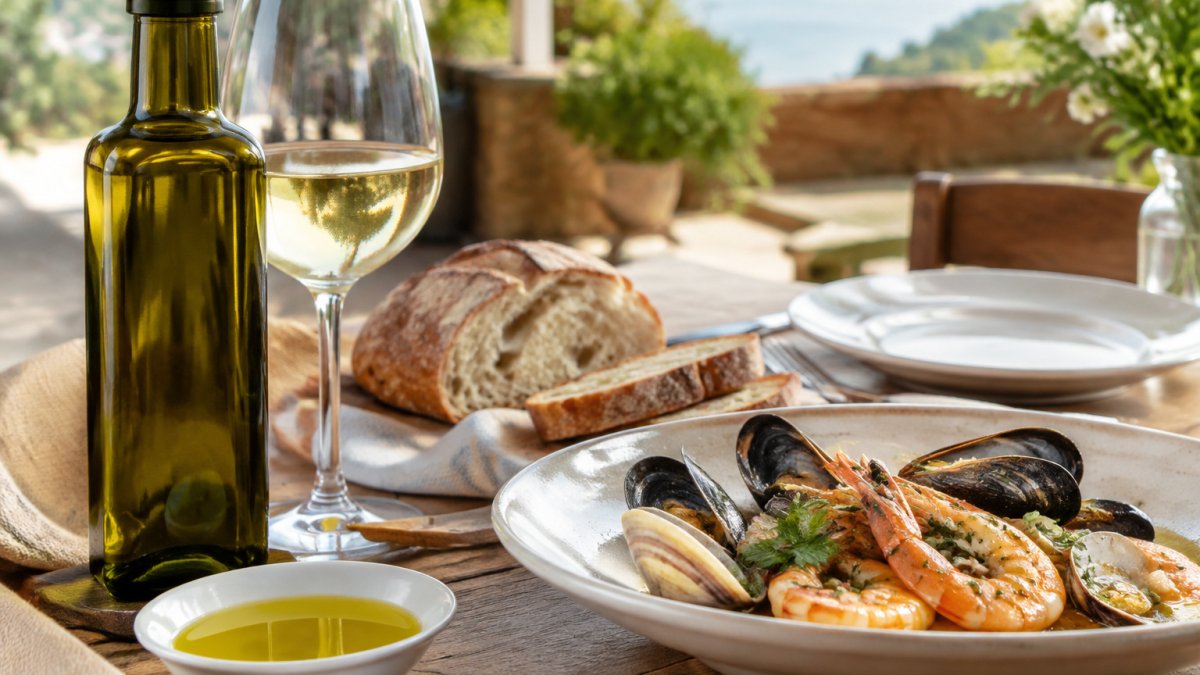
Delicate white fish and raw seafood call for a mild oil and a crisp, high-acid white. A Green Hojiblanca Superior Fresh Pressed Extra Virgin Olive Oil, at $8.99, brings notes of green banana, apple and star anise that lift shellfish without masking it.
Meat and Hearty Dishes
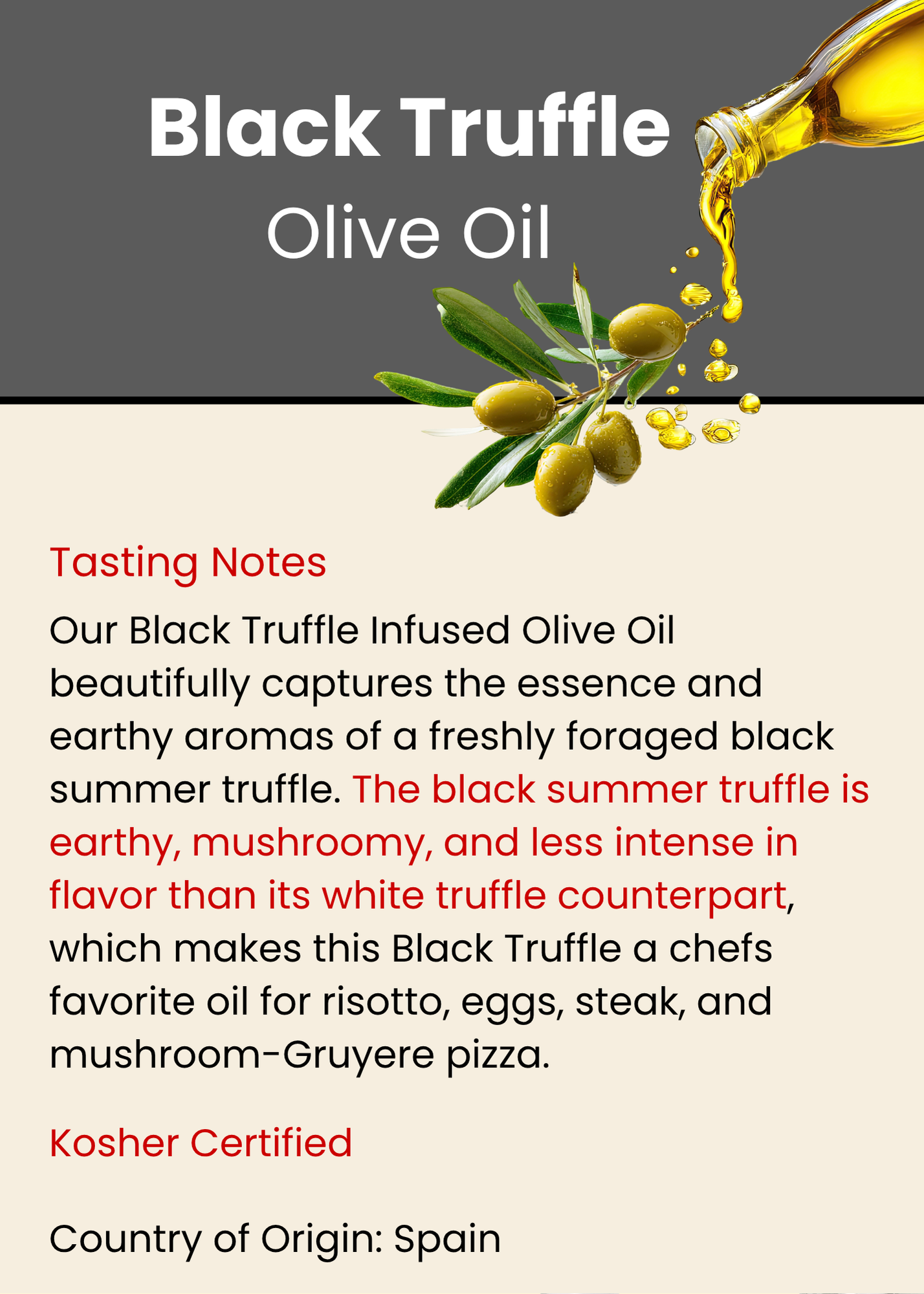
Grilled red meat and braised dishes need a strong oil and a structured red. A peppery oil finished over steak adds the same bite a Pinot Noir or dry sherry would bring, and the fat in the meat softens the oil's pungency. For a bold option, try the Black Truffle Extra Virgin Olive Oil.
Bread, Cheese, and Vegetables
Bread dipping is the most forgiving format. A mild oil suits soft cheeses and roasted vegetables, while a fruitier oil pairs well with briny olives and sharper aged cheeses. Keep the wine light and refreshing here.
How to Pair Wine and Olive Oil for Cooking
Cooking changes the rules. Heat dulls volatile aromas, so use cooking-grade oil for sautéing and reserve your best extra virgin for finishing. Wine itself works as a cooking liquid: a splash of dry white in a pan sauce or a red in a braise reduces to concentrated flavor that a drizzle of matching oil can complete. Add the oil at the end to preserve its character.
Extra-Virgin Olive Oil and Wine Pairings Matrix
Use this quick reference to choose a combination in seconds.
| Dish | Oil Style | Wine Style | Why It Works |
|---|---|---|---|
| Raw oysters, white fish | Mild, grassy (Green Arbequina, $8.99) | Crisp, high-acid white | Light body, bright acidity |
| Herb salad, goat cheese | Fresh, herbaceous (Green Hojiblanca, $8.99) | Sauvignon Blanc | Matching herbal notes |
| Grilled steak | Strong, peppery (Coratina, $8.99) | Full-bodied red | Tannin and bitterness reinforce |
| Roasted vegetables | Balanced, fruity | Light red or rosé | Mild body, soft acidity |
| Briny olives, aged cheese | Fruity, moderately bitter | Dry sherry | Salt and nutty depth |
Olive Oil Tasting Guide: Freshness, Storage, and a Repeatable Method
Freshness determines flavor, and flavor determines pairing. Oil loses aroma through oxidation, which is accelerated by heat, light, and oxygen. The result is a flat, waxy, or rancid note, and a pairing built on a stale oil will mislead you about the oil's true character.
Read the Harvest Date, Not the Bottle Date
Extra virgin olive oil is generally best used reasonably soon after harvest, and the harvest date is more useful than the best-by date. The date that matters is the harvest date, not the "best by" date, because a bottle can sit in a warehouse for months before it reaches a shelf. Browse our olive oils to compare harvest dates across the range. A common pattern is for grocery-store bottles to carry only a best-by date; when a harvest date is missing, treat the oil as older than you would like and taste before pairing.
Storage Rules That Preserve Pairing Character
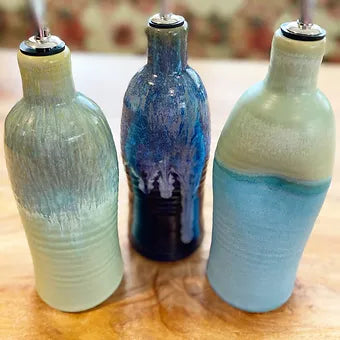
Store oil away from heat and light, tightly capped, in a dark glass or ceramic bottle or the original tin. Dark ceramic bottles are a practical choice for keeping a tasting collection protected. A kitchen cabinet beside the stove is the worst common spot; a cool pantry is better. Do not refrigerate extra virgin oil for long periods, it clouds and can absorb fridge odors, and do not expect a decorative clear-glass bottle on a sunny counter to hold its flavor for months.
Serving Temperature and Tasting Order
Serve oil at roughly 68°F to 72°F (room temperature); cold oil mutes aroma and exaggerates bitterness. When tasting several oils, go from mildest to boldest so a peppery oil does not numb your palate for the next sample. When tasting oil alongside wine, taste the wine first, then the oil, then both together, and note what changes, the wine's fruit may recede, the oil's bitterness may sharpen, or a new nutty or herbal note may appear. Sensory perception is personal, so treat your notes as your own reference rather than a universal verdict.
A Repeatable Four-Step Method
- Warm the oil slightly in your palm or a small cup.
- Sniff for fruit and grass; note whether the aroma is green (grass, artichoke, herbs) or ripe (apple, banana, nutty).
- Sip and note bitterness and pungency separately, bitterness at the back of the tongue, pungency as a peppery catch in the throat.
- Pair the sample with a bite of plain bread and a sip of wine, then record what changed.
Why This Matters for Pairing
An oil that has oxidized reads flat and slightly waxy, and it will make a crisp white taste thin and a red taste dull. A fresh oil of the same variety reads bright and herbal, and the same wine suddenly tastes more complex. Before you blame the wine, taste the oil plain. If it has lost its fruit, the pairing problem is the bottle, not the match.
Pairing Pitfalls, Budget Options, and Hosting Your Own Tasting
The most common mistake is pairing two strong flavors at once, such as a peppery oil with a heavily oaked wine. Premium extra virgin costs more than a grocery-store bottle, but a smaller bottle of a fresher oil often outperforms a larger, older one.
To host a tasting, set out three oils and three wines, label them, and provide plain bread and water. For a fun wine-themed game to close the evening, try the Pina Colada Wine Slushy Mix.
If you want guidance matched to your palate, our Olive Oil & Balsamic Pairing of the Month Club, at $34.99 per month, ships a hand-selected oil and balsamic each month so you can practice these pairings at home.
Frequently Asked Questions
Can you mix olive oil and wine?
Not in the same glass, but you can use them together on the plate. Olive oil and wine are both built on fruit, bitterness and acidity, so a fruity oil can echo a wine's citrus or green notes while a peppery oil can cut through the richness of a red. Drizzle the oil over the food rather than mixing it into the wine, and taste each pairing before serving to confirm the two flavors support each other rather than compete.
Should you match the intensity of olive oil to the wine?
Yes, in most cases. A mild, buttery oil suits a light white wine, and a robust, peppery oil can stand up to a full-bodied red. Matching intensity keeps neither the oil nor the wine from overpowering the other. The exception is when you want contrast: a bold oil can refresh a rich, fatty dish alongside a softer wine, which is a deliberate choice rather than a mismatch.
Do you need to refrigerate extra-virgin olive oil after opening?
No. Store opened extra-virgin olive oil in a cool, dark cupboard away from the stove, with the cap sealed tightly. Refrigeration can cause it to cloud and solidify, and heat, light and air are what degrade flavor over time. For best taste, use an opened bottle within a few months and keep it away from direct sunlight, since freshness matters most when you are tasting it side by side with wine.
Which wines pair best with extra-virgin olive oil?
Dry white wines with crisp acidity, such as Sauvignon Blanc and Vermentino, pair well with fresh, grassy oils, and light reds like Pinot Noir complement fruity oils. For a bold Coratina-style oil with peppery, bitter notes, choose a structured red with enough body to match its intensity. Test a small taste of each oil and wine together before serving a full pairing.
